
Finding a Rockingham Property Owner
Keep the evidence path short. Go from address to parcel. Move from parcel to the assessment owner. Then take that owner to the newest recorded deed. Rockingham County Property Lookup accepts an address, owner name, account number, PID, All, or Tax Map Number. An address sometimes refuses to match. The county GIS can then search by 911 address, owner name, tax map, or E911 street and route. Note the parcel key and legal description before you leave the map.
Treat the assessment owner as a lead, not a verdict. A deed names the parties to a recorded transfer and gives its date. The current roll and a recent deed can disagree. If so, set the recording date beside the January 1 assessment snapshot. The tax system publishes no fixed monthly update schedule. The newest recorded deed is therefore the better evidence of when a transfer happened.
- Find the parcel in Property Lookup or the county GIS by address, owner, or tax-map number.
- Record the owner name, mailing address, PID or tax map, and legal description that the assessment result supports.
- Search that owner as grantee in Virginia SRA and inspect the latest deed's parties and property description.
- If an LLC or corporation appears, use the Virginia SCC entity search to identify its filing record, then return to the deed for land ownership.
- Use the recorded mailing address only as a correspondence clue, not as proof of residence.
The Rockingham current-owner record explanation walks through the present assessment entry and its limits.
Rockingham Owner Search Keys
The Commissioner of Revenue's Property Lookup instructions lay out six search routes. These are Address, Owner, account number, PID, All, and Tax Map. A familiar house works fine with its situs address. A rural parcel with no standard street number calls for the tax-map number. It can also use the parcel ID instead. An owner search can return several parcels. So compare the mailing address and legal description before picking a winner.
County GIS offers owner-name and tax-ID search too. Its documented name modes are Begins With, Contains, and Matches Exactly. The county advises entering the last name first. A partial match catches spelling variants; exact match works once the spelling is settled. These options locate a parcel. However, the county's public instructions do not confirm the exact live assessment-card field names.
Write down the parcel key and the lookup date. Those two details let you return to the same assessment entry later. From there, search the owner as grantee in the Circuit Court Clerk's land index.
The Clerk's Virginia Secure Remote Access index is a separate step from the assessment lookup. Its modern real-estate index starts in 1941, and historical grantor indexes reach back through 1864 to 1941. Most remote images recorded after 1923 require a paid pass. But the index itself is free, and courthouse stations allow no-charge viewing. Copy fees and older book paths appear in the Rockingham deed records guide.
Rockingham Situs and Mailing Addresses
A situs address is the location assigned to the parcel, usually through the county's 911 addressing system. A mailing address is simply where tax notices go. The two often differ. An owner may live elsewhere. A trust or estate may use a representative, or a business entity may receive mail at an office. A postal city name alone cannot tell you whether a parcel sits inside a town. Nor can it confirm independent Harrisonburg.
Rockingham's cooperative Road, Street, and Subdivision Naming Manual covers address coordination across the county, the towns, and Harrisonburg. The GIS department lists 540-564-3029 for addressing questions. Use the map's 911 address and corporate-boundary lines to place the parcel. Then confirm zoning with the correct town or county office. Never treat a mailing city as proof of who occupies a home. The same goes for a ZIP code or tax notice address.
If an address search misses, try an abbreviated road suffix. Also try the first part of the 911 number before changing the owner name.
Sources for Rockingham Owner Names
Several public sources can name an owner. Each answers a different question. The Commissioner of Revenue keeps the assessment entry. The Clerk's index identifies grantor and grantee parties to a recorded instrument. GIS ties the parcel to its map location, and the Virginia SCC supplies corporate filings when a business name appears. Comparing them keeps an assessment name, a deed party, and an entity's agent from being mistaken for the same role.
| Source | Owner Info It Gives | Access |
|---|---|---|
| Property Lookup | Assessment owner, mailing/situs addresses, and parcel key | County public lookup |
| Virginia SRA | Grantor, grantee, recording reference, and instrument image access | Free index; image access varies |
| Online GIS | Parcel shape, 911 address, and owner/tax-map search | Free county viewer |
| Virginia SCC CIS | Business entity name, status, and registered-agent filings | State business search |
The assessment record names a taxpayer or owner of record, not necessarily the person occupying the property. A mailing address may belong to an estate representative or an entity. A deed image is the recorded conveyance evidence, yet real title research also checks liens, satisfactions, easements, and the earlier links in the chain.
Confirm a Rockingham Owner in the Deed
An assessment name is only a starting clue. The recorded deed names the parties. Search that name as grantee in Secure Remote Access, then open the newest matching deed and compare the grantor, grantee, recording date, book and page, and legal description. A later filing date may lag the day the parties actually signed or closed, so keep those dates distinct.
Check the instrument type before calling anyone an owner. A deed of trust secures debt; it does not itself convey title. A satisfaction releases one. A fiduciary deed points to an estate transfer, and the probate file behind it shows who had authority to sell. If the parcel description, tax map, or acreage clashes with the assessment result, pull the recorded plat and the prior conveyance reference before trusting the name match.
Titles run deeper than one lookup. One name is not a chain of title. For a definitive review, follow the linked conveyances and recorded liens with a qualified title professional. A single name on an assessment result proves neither a complete nor an unencumbered ownership history.
Rockingham Trust and Estate Owners
A Rockingham County parcel is not always vested in a single person. The owner of record may be an LLC, a corporation, a trust, a trustee, an estate, or married owners. Read the exact wording on both the assessment and the deed. When a company name shows up, the SCC's Clerk's Information System can reveal the business filing. The filing also lists its registered agent. That filing helps you interpret the entity. It does not prove which parcel the entity owns.
Probate belongs to the Circuit Clerk's probate division. The division handles wills and the qualification of executors and administrators. A fiduciary deed, an estate sale order, or a distribution can explain a change. It can show why a new owner of record appears in Rockingham County land records. Compare the probate file against the deed record. Vital records establish dates and relationships. But a certified death certificate and a recorded property transfer remain different records governed by different access rules.
Rockingham probate staff can be reached at 540-574-4320. The Clerk's online records information and the SRA index give a starting point for older estate references.
Rockingham's January Owner Snapshot
The county assesses real estate as of January 1. A sale later in the year can make the tax-roll owner differ from the grantee in a deed recorded after that date. Settlement prorates the annual economic burden, but it does not change the date the assessor uses for the roll. The county does not state a fixed update lag, so do not promise that the online assessment will change within a set number of days.
When two sources differ, line up their dates and roles. The assessment owner helps locate the account. The recorded deed shows the transfer instrument and filing date. The Treasurer handles the bill, not the deed. The current-value area in Property Lookup is preferred over an older bill or card when checking a recent value change.
The county's assessment directions point to Property Lookup for current values.
Limits of a Rockingham Owner Lookup
Public records have edges. A deed or tax-roll entry names an owner of record, not who lives there now. It cannot verify occupancy or whether an owner welcomes contact. It is not a title search. It will not resolve a disputed boundary. Virginia's Address Confidentiality Program gives eligible survivors a substitute mailing address for state and local records, but it is not retroactive and does not erase earlier deeds.
Lawful use. Use Rockingham County owner records for property research and due diligence. Virginia law prohibits stalking and harassment; do not use a name, address, or parcel detail to target or harm anyone.
Privacy concerns have a formal channel. The Virginia Attorney General's Address Confidentiality Program uses an advocate-supported application and a substitute address for participating public records. Its certification is time-limited. It does not erase a deed already recorded. For a specific record, ask the actual custodian whether a statutory protection applies, and confirm the current program rules.
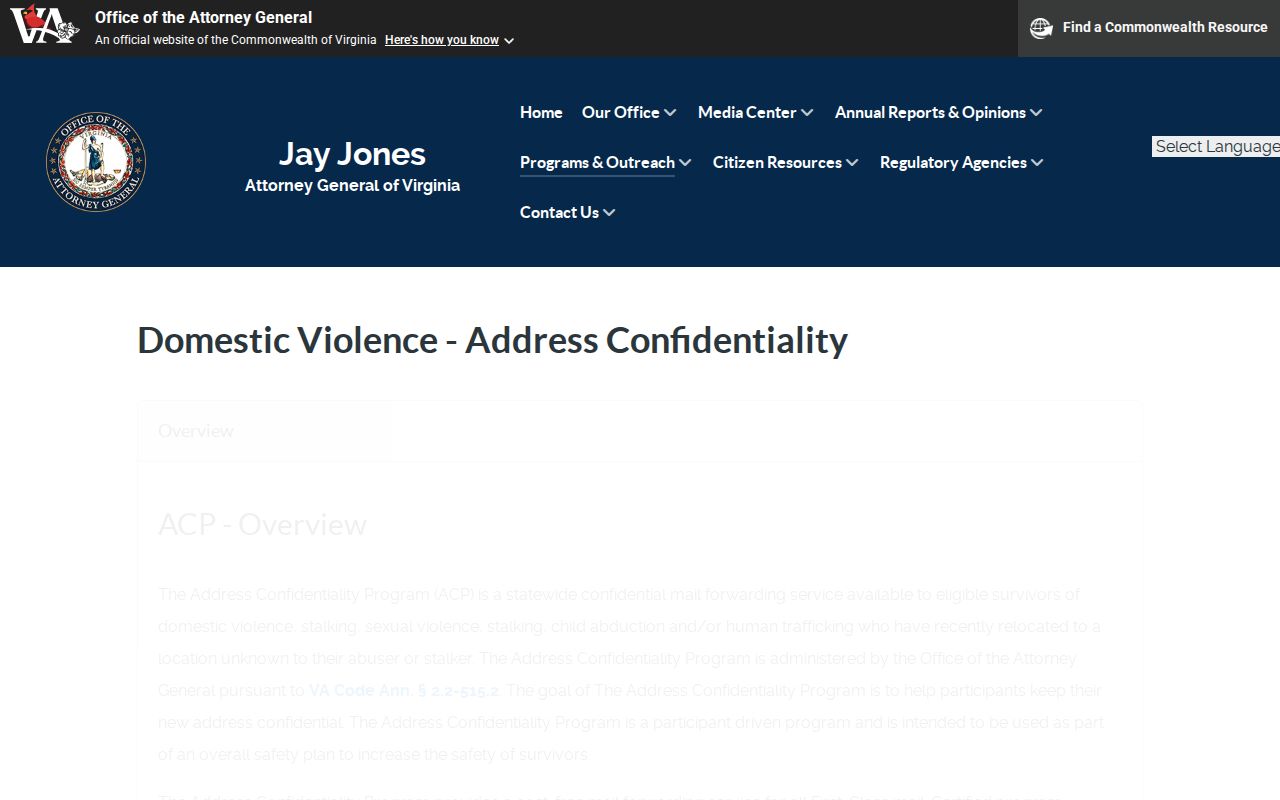
The program offers a protected substitute address through its eligibility process. It is not a general deletion of recorded property records.